

Keep more cash for life after closing
Eligible buyers can buy with no required down payment. Closing costs and other buying expenses still need a place in the budget.
Your USDA loans guide
An eligible home. A fresh start. A smaller cash hurdle.
USDA loans may help eligible buyers purchase a main home with no down payment. We’ll help you check the address, household income and full payment, then put the next steps together.
Your plans. Clear choices.
A USDA home loan may help when saving for a down payment is the main hurdle. The Guaranteed Loan Program uses approved private lenders, with part of the loan backed by the U.S. Department of Agriculture. It is for eligible households buying a home they plan to live in. The address, household and mortgage all need review.
Eligible buyers can buy with no required down payment. Closing costs and other buying expenses still need a place in the budget.

USDA uses its own map of eligible areas. Check the exact address; a rural appearance or town name does not settle it.

You do not have to be a first-time buyer. Tell us about any home you own now so the lender can check your situation.
The guaranteed program uses 30-year fixed-rate loans. Taxes, insurance and other home costs can still change.
The official USDA Guaranteed Loan guide explains the program. This page covers lender-made guaranteed loans; USDA Direct loans follow a different program.
Keep your whole plan in view
We’ll help you compare the payment, cash needed and savings you want to keep. Bring us your plans and the home you have in mind.
Plan for loan fees, an appraisal, inspections, taxes and insurance. Ask what you would pay yourself, what help may be allowed and whether any eligible costs can be included in the loan. Do not assume every expense is covered.
USDA uses an upfront guarantee fee and an annual fee, rather than Conventional private mortgage insurance. The annual fee is collected through monthly payments. Financing an allowed upfront fee adds to what you owe. Ask for the fees that apply to your loan; USDA’s fee guidance explains how they work.
Add property taxes, home insurance and any flood coverage or HOA dues. Keep room for repairs, utilities and savings. A no-down-payment loan should still leave you with a home budget you can manage.
Start with the home you have in mind
Use USDA’s official map to see whether a home is in an eligible area for the Guaranteed Loan Program. Search the full address, rather than relying on a town name.
Open USDA eligibility mapThe map checks the area. Your household income, finances and the home still need review. USDA makes the final property eligibility decision with a complete application.
A clearer picture
Let’s talk through the details that matter to your plans, so you can compare your choices with clear answers.
Ask Your Mortgage QuestionsStart with the USDA eligibility map to check the home’s area. A map result is a first step. The lender and USDA still review the home, your finances and the full application.
Income limits vary by location and household size. Income from adult household members can count even if they are not borrowing. Some income is excluded and certain deductions may apply. USDA’s household-income guide explains why the lender needs to review the calculation rather than use one paycheck.
The income used to decide household eligibility is not always the same as the income used to approve the mortgage. The lender also reviews credit, debts and stable income. Ask us to look at the whole picture instead of relying on a credit score alone.
USDA is for your main home, rather than a vacation home or rental investment. The lender also checks the home’s condition, value and program requirements. Some construction and repair uses are allowed, but ask about the lender and project before counting on them. USDA’s eligible-use guide explains those options.
The guaranteed program uses a 30-year fixed-rate mortgage. The amount you can borrow depends on your ability to repay and the appraisal. USDA’s loan-terms guide explains the rules. Ask us what amount fits your situation.
Someone to help with the details
Start with your questions. We’ll help you understand what comes next and keep your plans moving.
USDA’s homebuyer fact sheet gives a useful starting point. Use the CFPB Loan Estimate guide to understand the payment and cash shown in a written quote.
Our team helps smooth out bumps, keeps you in the loop and explains your loan terms before you sign.
Your wish list leads the way
Compare the choices for your home and goals. We’ll help you understand how they fit together.
If the address or household does not fit USDA, FHA may offer a low-down-payment option. Compare the insurance, fees, payment and cash needed. The CFPB FHA guide explains the basic differences.
If your credit and savings fit, compare a Conventional quote too. Ask about available down payments and any mortgage insurance. The CFPB conventional-loan guide explains that option; it is not a promise that every buyer qualifies.
If you have qualifying military service, ask whether your VA benefit could help you buy. It has its own service and lender review. The VA eligibility guide explains who may qualify.
The people behind your next step
Beaufort Lending is a mortgage broker in Port Royal, helping buyers across South Carolina. We shop loans from wholesale lenders, then help you compare payments and closing costs. Our team explains your choices in plain words and helps you see what fits your budget. From your first questions to closing, you have people to turn to for help.

His guidance made every step feel manageable, even when the situation changed quickly.
Easy to communicate with, always available to answer any questions and provided a seamless experience.
Gracie went above and beyond to make my home loan process smooth and stress-free after my previous lender kept delaying my closing.
Let’s clear a few things up
You can start the conversation before you choose your next step.
Ask Your Mortgage QuestionsSome eligible costs may be financed if the appraisal and loan rules allow it. Ask for the exact cash you would still need. A no-down-payment option does not mean every closing cost can be added.
We can help you compare another loan for that home, such as FHA, Conventional or VA if you are eligible. You do not have to change where you want to live just to keep exploring your buying options.
USDA has refinance options for eligible current borrowers. Ask us to compare the costs and possible benefit for your existing loan. A lower payment alone does not show the full cost.
The guaranteed program does not allow prepayment penalties. Ask your loan servicer how to apply extra money to your balance or request the amount needed to pay the loan off.
Tell us the home’s address if you have one, who will live with you, your income sources and the payment you want. We can explain which records to provide and help you plan the next step.
The Learning Center
Explore useful questions and comparisons for your home plans.
More help with your plans
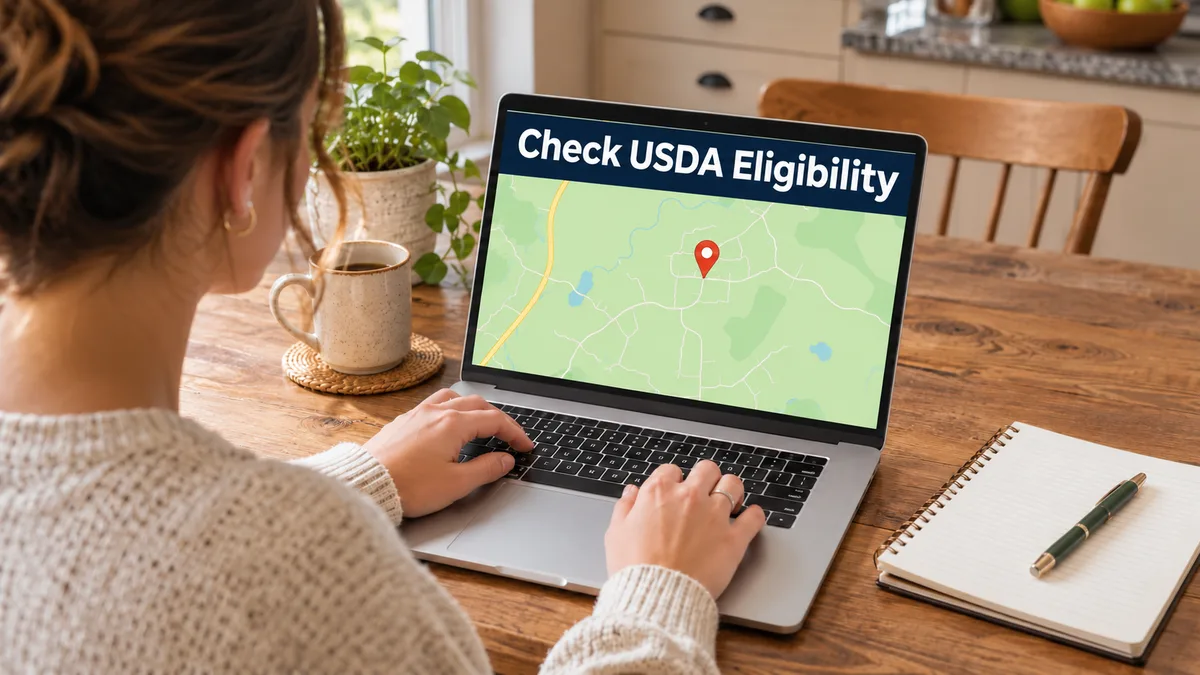
Use the official USDA map to check the home you want to buy. See what to do if the pin looks wrong and what your lender still needs to review.
Read the guide
More help with your plans
A USDA loan can cover the full home price. See what you may still need for an inspection, closing costs, and the USDA fees.
Read the guideMore help with your plans
Compare USDA and FHA for the same South Carolina home. Check which loan may fit, how much cash you need, and what goes into each payment.
Read the guideTell us where you want to buy or own a home. We’ll help you connect your plans to the address.
Your next chapter
Bring us your questions and the plans you have in mind. We’ll explain your options and help you see a useful next step.