Renovation Loan: How Does It Work From Bid to Final Payment?
AI-generated illustrations for this guide.
A South Carolina renovation loan guide
A renovation loan starts with a plan for the work and ends with the lender’s approval of the finished job. Before closing, you get bids and the lender reviews the home, your finances, and the repair plan. After closing, the contractor does the approved work. The lender releases repair money under the loan’s payment rules.
The steps depend on the loan you use. FHA 203(k) and Fannie Mae HomeStyle Renovation have different rules for reviews, payments, and deadlines. Ask which program fits your home and which options are available for your project. If you’re still weighing the choice, see whether to roll repairs into the mortgage or pay later.
What does the contractor’s bid need to include?
Start with what you want to change and any repairs the home needs. Ask the contractor for a written bid that breaks out the work, materials, labor, and costs. Include a start date and a plan for finishing the job. Ask who will get any needed permits.
With a Standard FHA 203(k) loan, a consultant inspects the home and prepares a written list of work and costs. The consultant helps identify required repairs as well as the changes you want. A consultant is optional for Limited 203(k). HUD explains these early 203(k) steps.
What does the lender review before closing?
The lender reviews your income, credit, debts, and cash along with the home and repair plan. It arranges an appraisal. The appraiser uses the proposed work to estimate the home’s value once that work is done. See the HomeStyle appraisal rules and our South Carolina FHA 203(k) guide for the loan you’re considering.
Ask the lender to work through the full budget with you. It may include permits, inspections, loan fees, and money set aside for surprise repairs. You’ll also want to know the monthly payment and what cash you’ll have left after closing.
Before you sign, get answers to these questions.
Who will handle repair payments after closing, and how do you reach them?
What must the contractor send in to get paid?
Can the loan pay an approved deposit or material cost up front?
What work must be done before you can move in?
Where does the repair money go at closing?
The purchase closes, or the refinance pays off the old loan. The money for approved repairs goes into a repair escrow account, an account the lender controls. Your loan agreement sets out how that money can be paid to the contractor. For FHA 203(k), HUD’s borrower acknowledgment explains the account and your role.
Some programs allow an early payment for approved costs. For example, HomeStyle can allow an initial draw at closing. Have the lender and contractor work out how any deposit will be handled before you pay it yourself.
How does the contractor get paid after closing?
A payment from the repair account is called a draw. The contractor completes work and provides the records needed for a payment request. You review the work, and the lender gets the inspection or other proof the program requires. Then the lender approves the release of funds.
For Standard 203(k), the consultant inspects progress and helps prepare draw requests. You, the contractor, and the consultant sign the request. The lender reviews it and approves payment. Limited 203(k) has different inspection rules based on the repair costs. See HUD’s draw and payment rules.
For HomeStyle, the lender checks progress through inspections and pays under the agreed schedule. Funds can be paid by a joint check or, with your written consent, a wire to the contractor. See Fannie Mae’s payment rules.
Review the work before you approve a payment. If something is unfinished or doesn’t match the plan, tell the lender and contractor before signing off. Ask what records or inspection are needed to resolve it.
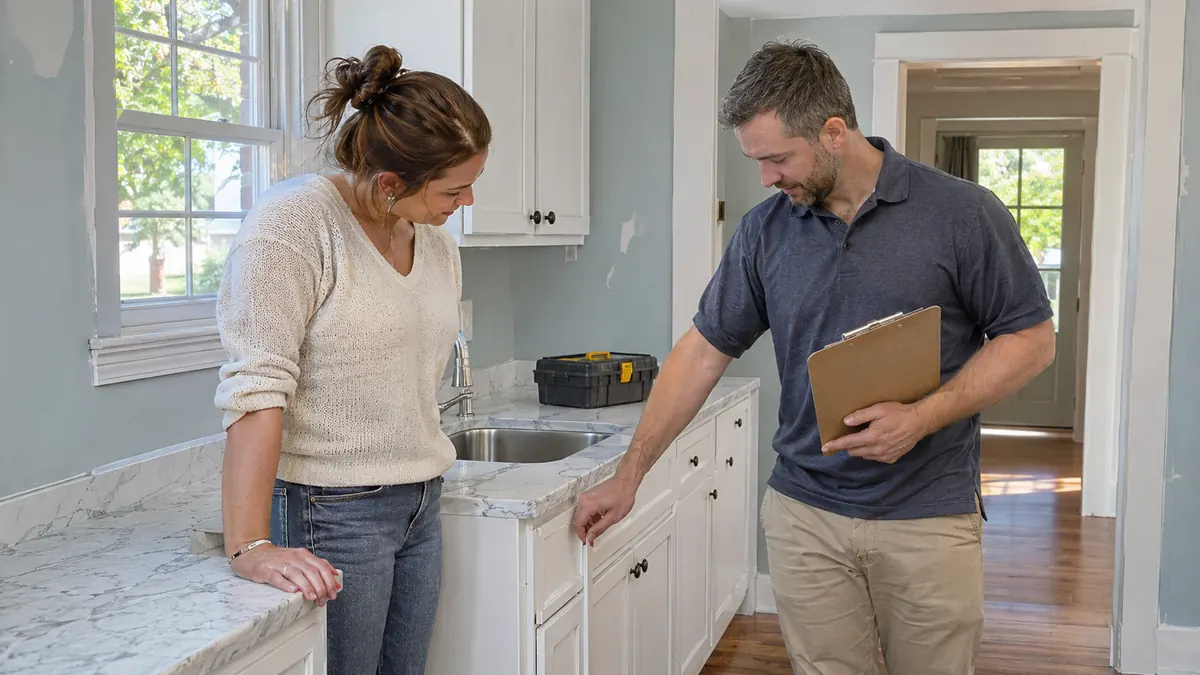
Compare the finished work with the plan before you sign the payment request.
What if the work costs more or takes longer?
Tell the lender as soon as the contractor finds a problem or a delay. Ask for a written change to the plan, called a change order. It should show the new work, cost, and finish date. Get the lender’s approval before the changed work starts. HomeStyle requires that review, and FHA 203(k) also requires approval of changes.
Your budget may have a contingency reserve, money set aside for unexpected repair costs. Ask how much you need, whether it can be financed, and what it can pay for. If that fund falls short, ask how you’ll cover the gap. Under HomeStyle’s rules, the lender cannot raise the loan amount to cover a cost increase after closing.
If the finish date slips, contact the lender before the deadline. An extension needs approval. Ask the contractor for the reason for the delay and a new schedule so the lender can review the request.
Who signs off before the final contractor payment?
You review the completed work with the contractor and raise any remaining issues. The lender checks the final paperwork and any required inspections before releasing the last funds.
Standard FHA 203(k). The lender approves the final inspection and draw request signed by you, the contractor, and the consultant. Limited 203(k) also requires the lender to confirm that the work is done and acceptable to you. HUD’s final release rules explain the required sign-offs.
Ask for the final account statement. Check what was paid and what happens to any money left. Financed funds may reduce your loan balance or pay for further approved work, depending on the program. Ask how any money you put in yourself will be handled.
Common questions about renovation loan steps
How long do I have to finish the repairs?
Use the finish date in your loan agreement. The program’s normal limits are shown below. Your agreed schedule may be shorter.
Renovation loan
Normal time allowed for the work
Standard FHA 203(k)
Up to 12 months
Limited FHA 203(k)
Up to 9 months
HomeStyle Renovation
Up to 15 months
For FHA 203(k), the repair period starts when the mortgage is funded. HomeStyle measures from closing. See HUD’s repair periods and Fannie Mae’s HomeStyle deadline. Ask early about an extension if you need one.
Can I start work before the renovation loan closes?
Plan the start date with the lender before you hire anyone to begin. The work and budget need approval, and you’ll need the right permits. Ask before paying deposits or starting work you want the loan to cover.
Do I make mortgage payments while repairs are underway?
Plan for your mortgage payment during the work. Some programs may let you finance a limited number of payments if you can’t live in the home. Ask what your loan allows and how you’ll pay for a place to stay. Fannie Mae explains when payments may be included.
Want our team to run the numbers for your renovation?
Share the home’s address, what you want to fix, and any bid you have. We’ll help you work through the loan choices, cash you’ll need, and how repair payments would work for your project.
General education. Loan terms and eligibility depend on a full review. Beaufort Lending, NMLS #1703543. Equal Housing Opportunity.
About Benji Gecy (NMLS #302188)
Benji Gecy is the Broker and Owner of Beaufort Lending and a recognized leader in the mortgage industry. A South Carolina native, Benji launched his lending career in 1997 and has since helped thousands of families buy homes across the Palmetto State.
When he's not helping clients, you can hear him talking shop on 104.9 The Surf, 107.5 The Game, or WHHI-TV in Hilton Head.