Home Equity: How Much Can You Use Without Stretching Your Budget?
AI-generated illustrations for this guide.
A South Carolina home equity borrowing guide
Start with what you need to pay for and a loan payment that leaves room in your budget. Then have a lender check how much you can borrow against your home. The amount you qualify for may be more than you want to use.
A useful plan covers the expense, loan costs, and room for surprises while keeping emergency savings intact. It also accounts for your current mortgage and the new payment. Home equity can help cover a large expense, but it comes with a debt you must repay.
Can you borrow all the equity in your home?
Your equity is the home’s value minus the debt secured by it. Suppose your home is worth $400,000 and your only home loan has a $250,000 balance. That leaves about $150,000 in equity. It doesn’t mean you can receive $150,000 in cash.
The lender reviews your home’s value, income, credit, debts, and loan terms. The FTC’s home equity guide explains those borrowing factors. An online value estimate is a starting point; ask what appraisal or other valuation the lender needs.
Share the balances of all loans secured by your home, plus the limits and balances of any HELOCs. Ask how the lender counts them and how much equity must remain. Federal home equity lending guidance calls for review of existing liens, home value, and your ability to repay. No single borrowing percentage fits every loan.
How much do you need to borrow for what you have in mind?
Start with a list of the amounts you want to cover. That might be home improvements, education costs, debts you want to combine, or another large expense. The OCC’s home equity overview describes several common uses. Ask the lender whether the loan fits your intended use.
Use written estimates, bills, or current payoff figures to set the amount. Include costs that may come later, and decide how much cash you can contribute while keeping emergency savings. Then ask the lender for an itemized fee estimate. Some costs may be paid in cash; others may be financed if the loan allows it. Confirm what you would owe and the cash you would receive.
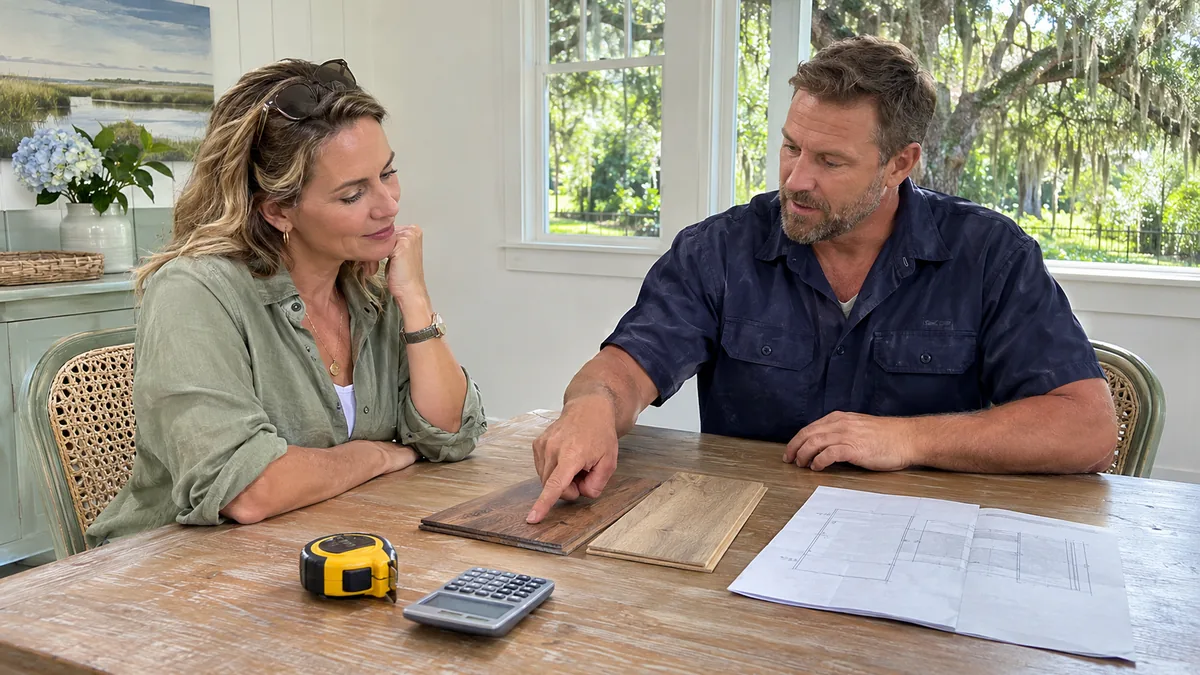
For one possible use, suppose the same homeowner wants to make home improvements. Get written bids that list the work, materials, timing, and price. The FTC’s contractor guidance explains what to look for. Ask about costs outside the bid and leave room for surprises. A sample plan might look like this.
Planned cost
Amount
Work in the contractor’s bid
$34,000
Room for project surprises
$4,000
Estimated loan costs
$2,000
Total to plan for
$40,000
These are sample costs, not local price quotes or required reserves. Use your bids, fees, and project risks. If you plan to use savings for part of the work, first decide what you need to keep for emergencies.
What would the new loan add to what you owe?
Adding $40,000 to the existing $250,000 mortgage would bring the two balances to $290,000. Against a $400,000 home value, that is 72.5%. That is just balance-to-value math, not a loan approval or a safe-borrowing rule.
If you use a HELOC, its approved credit limit may be larger than what you draw. Ask how the full line affects the lender’s review. If you use a cash-out refinance, the new loan replaces the current mortgage. Our HELOC, home equity loan, and cash-out refinance comparison explains that choice.
What home equity payment fits your monthly budget?
Work from your take-home pay and actual spending. Include the first mortgage, taxes, insurance, HOA fees, other debts, everyday bills, and planned savings. Avoid counting taxes or insurance twice if they are already in your mortgage payment.
Suppose this household has $750 left each month after those costs. They want to leave $300 uncommitted for changes in spending. That gives them a $450 target for the new loan payment. Those amounts reflect this household’s choices, not a lender rule or a target for everyone.
Here is how a $40,000 balance could compare with that target over 15 years.
Both payments are below the household’s $450 target, with less room at the higher rate. That alone doesn’t settle the choice. They still need to check the actual offer, project costs, savings, and what happens if income or expenses change.
Each case assumes the full $40,000 is borrowed, including the planned project cushion and financed fees. The lender must confirm how costs can be paid. Each rate stays unchanged for 15 years with equal monthly payments and no new borrowing. The payment excludes the first mortgage and other home costs already included in the household budget.
Try your own payment in our mortgage calculator. To estimate just this balance, enter it as the home price with no down payment, choose 15 years, and set taxes, insurance, PMI, and HOA costs to zero. Add those household costs back into your budget. The tool estimates a level payment; it doesn’t model HELOC draws or future rate changes.
Use the written work plan and loan costs to set the amount you need.
Should you budget for more than the first HELOC payment?
If your HELOC starts with interest-only payments, those payments don’t reduce the amount borrowed. Later principal repayment can raise the payment. A variable rate can change it too. Ask for the payment at a higher rate and when repayment starts, plus any balloon amount due.
How much savings should you keep when using home equity?
Keep your project cushion separate from money for a job loss, medical bill, or other household emergency. The amount depends on your income, regular costs, and past surprises. The CFPB’s emergency fund guide suggests setting a savings goal around your own situation.
An unused HELOC line is access to borrowed money, not cash savings. The CFPB explains that access can be frozen or reduced in certain cases, such as a large drop in home value. Don’t base the whole emergency plan on being able to draw more later.
If the payment or cash left feels too tight, ask about a smaller project, doing the work in stages, or waiting while you save. You can also compare a fixed home equity loan with a HELOC. Review the full costs and payoff date before choosing a smaller payment through a longer loan.
Common questions about how much home equity to use
Should I borrow the full amount I’m approved for?
Base the amount you use on the cost you need to cover and the payment you want to carry. With a HELOC, check any required first draw, minimum balance, or fees before deciding to leave part of the line unused.
Can I use a home equity loan if my mortgage is paid off?
You may be able to borrow against the home, subject to the lender’s review. Having no current mortgage doesn’t remove the need for a payment plan. The new debt is secured by your home, and you could lose it if you can’t repay as agreed.
What if the project costs more than I planned?
Ask for the new work and price in writing before you approve the change. Check what it does to both the project budget and your payment. Don’t assume a larger loan or credit line will be approved. If the extra cost doesn’t fit, discuss reducing or delaying part of the work.
Share the expense you want to cover, your current mortgage, and the payment you’re comfortable with. We’ll help you work through the loan choices, costs, and cash you would receive so you can decide what fits.
General education. Loan terms and eligibility depend on a full review. Beaufort Lending, NMLS #1703543. Equal Housing Opportunity.
About Benji Gecy (NMLS #302188)
Benji Gecy is the Broker and Owner of Beaufort Lending and a recognized leader in the mortgage industry. A South Carolina native, Benji launched his lending career in 1997 and has since helped thousands of families buy homes across the Palmetto State.
When he's not helping clients, you can hear him talking shop on 104.9 The Surf, 107.5 The Game, or WHHI-TV in Hilton Head.